
What Is Air Wellness?
A More Complete Approach to Indoor Comfort
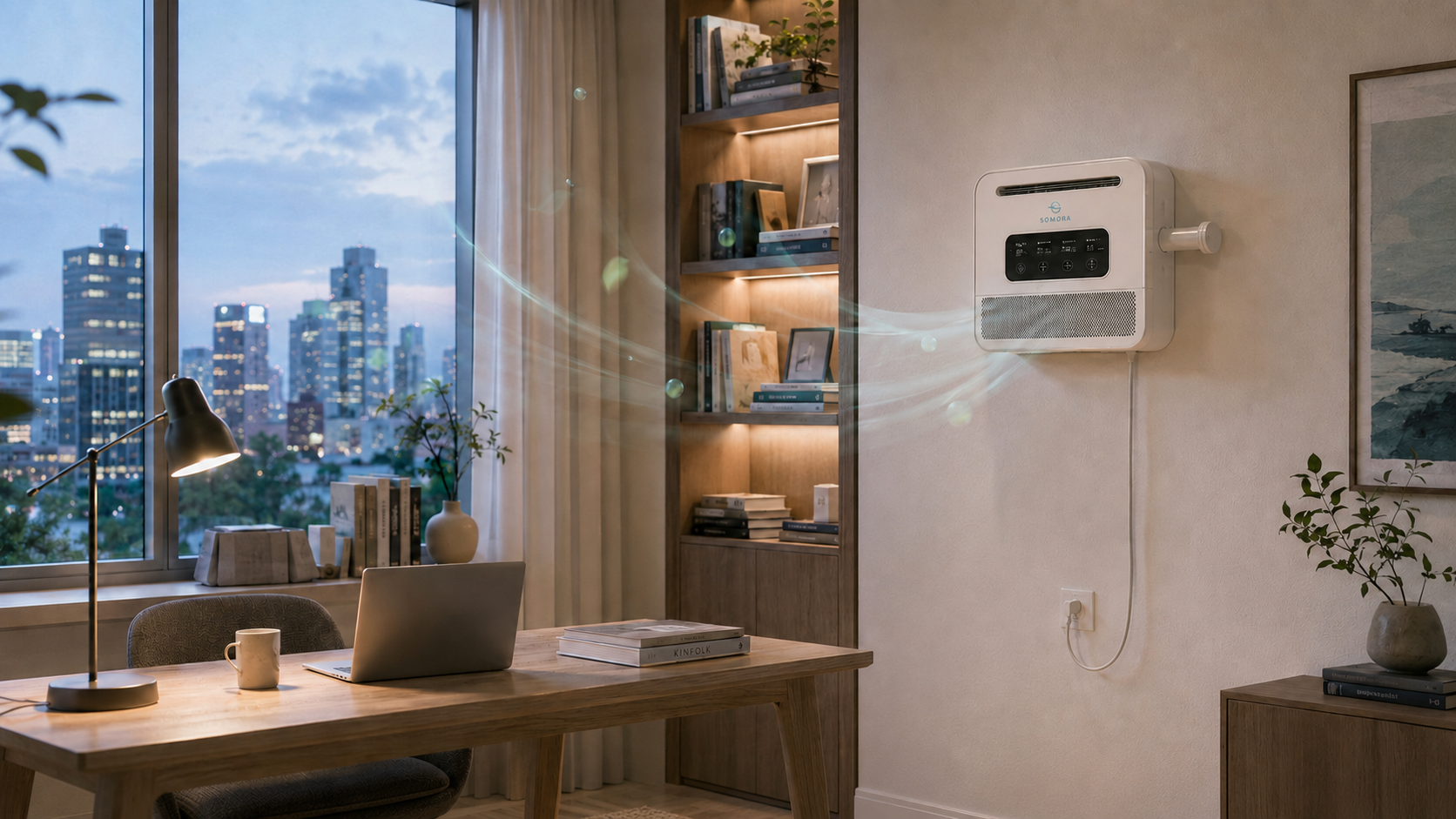
Air is always around us, yet we rarely think about it until a room begins to feel stuffy, carries an unwanted odor or becomes uncomfortable to spend time in.
Indoor air can be influenced by furniture, building materials, cleaning products, cooking, humidity, outdoor pollution, limited ventilation and the everyday activities of the people sharing a space. A room may appear perfectly clean while the air still feels stale or unpleasant.
According to the U.S. Environmental Protection Agency, people spend approximately 90 percent of their time indoors. This makes the quality and comfort of indoor environments an important part of everyday living.
Air wellness is a more complete way of thinking about that environment.
Rather than focusing on only one pollutant or one type of air-cleaning device, air wellness considers how cleanliness, odor, airflow, noise, humidity, oxygen conditions and product usability work together to shape the experience of a room.
It is not a medical term and does not refer to medical treatment. It is a practical approach to creating indoor spaces that feel fresher, calmer and more comfortable.
Air Quality and Air Wellness Are Related—but Not Identical
Indoor air quality is commonly discussed in terms of pollutants such as particles, biological contaminants, volatile organic compounds, combustion by-products and excess moisture.
These factors are important, but people also experience air in less technical ways:
Does the room smell fresh when the door is opened?
Does the air feel still or stuffy?
Is the airflow too strong or uncomfortable?
Does equipment create noticeable noise at night?
Can the system operate continuously without demanding frequent maintenance?
Does the air environment suit the way the room is actually used?
Air wellness connects measurable air-care performance with these everyday experiences.
The objective is not simply to place another appliance in a room. It is to create an air-care solution that fits naturally into the space and supports the people using it.
The Main Elements of Air Wellness
1. Cleaner-Feeling Indoor Air
A comfortable indoor environment begins with controlling pollution sources, maintaining suitable ventilation and using appropriate supplementary air-care technologies.
The EPA identifies three fundamental strategies for improving indoor air quality: source control, improved ventilation and air cleaning or filtration. In many situations, removing or reducing a pollution source is the most effective first step. Air-care devices should support these practices rather than be presented as a substitute for them.
SOMORA develops air wellness products that can complement normal ventilation, cleaning and building-management routines.
Depending on the product and application, the technology may support everyday air hygiene, room-air circulation and the reduction of unwanted airborne contamination.
2. Odor and TVOC Management
Unwanted odors can come from cooking, textiles, pets, smoke, luggage, cleaning products, furniture, building materials and previous room occupancy.
Covering these odors with a strong fragrance may change what people smell, but it does not necessarily address the underlying air environment.
Volatile organic compounds, commonly referred to as VOCs or TVOCs when assessed as a group, may be released by many everyday products and materials. The EPA reports that concentrations of several organic compounds are often higher indoors than outdoors.
Air wellness therefore includes active odor and TVOC management alongside sensible source control and ventilation.
Selected SOMORA products use engineered ion-based air-care technology and continuous circulation to help create a fresher, more neutral-feeling indoor environment without relying on heavy fragrance.
3. Comfortable Air Circulation
Air-care technology is useful only when its effect can reach beyond the immediate area around the device.
Airflow design influences how treated air moves through a room, how quickly unwanted odors can be addressed and how evenly the air-care effect is distributed.
However, stronger airflow is not always better. A bedroom may require gentle, low-disturbance circulation, while a hotel turnover period or odor-control application may benefit from a faster operating mode.
SOMORA considers room size, product placement, air outlet direction and intended operating time when developing different air wellness solutions.
4. Quiet, Low-Disturbance Operation
Air equipment becomes part of the environment in which it operates.
In a bedroom, hotel room or wellness space, excessive noise, bright indicator lights and strong drafts can reduce comfort even if the device is performing an air-care function.
Sleep-focused air wellness therefore places additional emphasis on:
Quiet operating modes
Gentle airflow
Low-disturbance lighting
Low energy consumption
Suitability for extended operation
Simple everyday controls
This approach can be seen in SOMORA’s Better Air for Better Nights bedroom concept, where air technology is designed to work naturally around the sleeping environment.
5. Oxygen-Enriched Air for Selected Environments
Some air wellness applications may also include moderately oxygen-enriched airflow produced through membrane-based separation technology.
Unlike medical oxygen concentrators, these systems are developed to improve the air environment of a selected room or occupied zone. They are not intended to provide prescribed oxygen therapy, diagnose a condition or replace medical equipment.
Depending on the configuration, oxygen-enriched airflow may be distributed across a localized sleeping area or introduced into a selected indoor space.
By combining oxygen enrichment with appropriate circulation and complementary air-care technology, SOMORA is developing a broader platform for environments where freshness, comfort and low-disturbance operation are especially valued.
Different Spaces Need Different Air-Care Strategies
There is no single air wellness solution for every environment.
A bedroom prioritizes quiet operation and gentle nighttime airflow. A hotel must consider room turnover, previous occupancy, unwanted odors and the guest’s first impression. A vehicle is a much smaller enclosed space and depends on the car’s existing ventilation system. Care environments may require continuous operation and faster odor management.
SOMORA therefore develops products and configurations for different settings, including:
Homes and bedrooms
Hotels and hospitality spaces
Wellness, spa and fitness environments
Offices and shared indoor spaces
Senior-living and care environments
Vehicles and personal travel spaces
The SOMORA hotel air wellness approach, for example, brings together odor management, everyday air hygiene, quiet operation and whole-room circulation to support a fresher guest-room experience.
Thoughtful Engineering Matters
Responsible air wellness should be supported by practical engineering and clear evidence.
Depending on the product, SOMORA development priorities include:
Engineered positive and negative ion generation
Controlled low-ozone output
Quiet operation
Low energy consumption
No routine consumable replacement
Effective air circulation
Membrane-based oxygen enrichment
Simple maintenance
Product-specific performance testing
Test results should always be communicated together with the applicable product, operating mode and test conditions. Air wellness is not about making exaggerated promises. It is about combining appropriate technology with responsible communication and realistic everyday use.
Better Air Is Part of Better Living
Temperature, lighting, sound and interior design all affect how a room feels. Air should be considered with the same level of care.
Air wellness brings these considerations together through a practical, human-centered approach to indoor air. It looks beyond a single specification and asks a broader question:
How can air technology help a space feel fresher, calmer and more comfortable throughout everyday life?
That question guides SOMORA’s work across sleep-focused air care, hotel environments, odor and TVOC management, ion-based air technology and oxygen-enriched air wellness.
SOMORA — Better Air. Better Living.
Explore SOMORA Technology, Products and Air Wellness Solutions.


